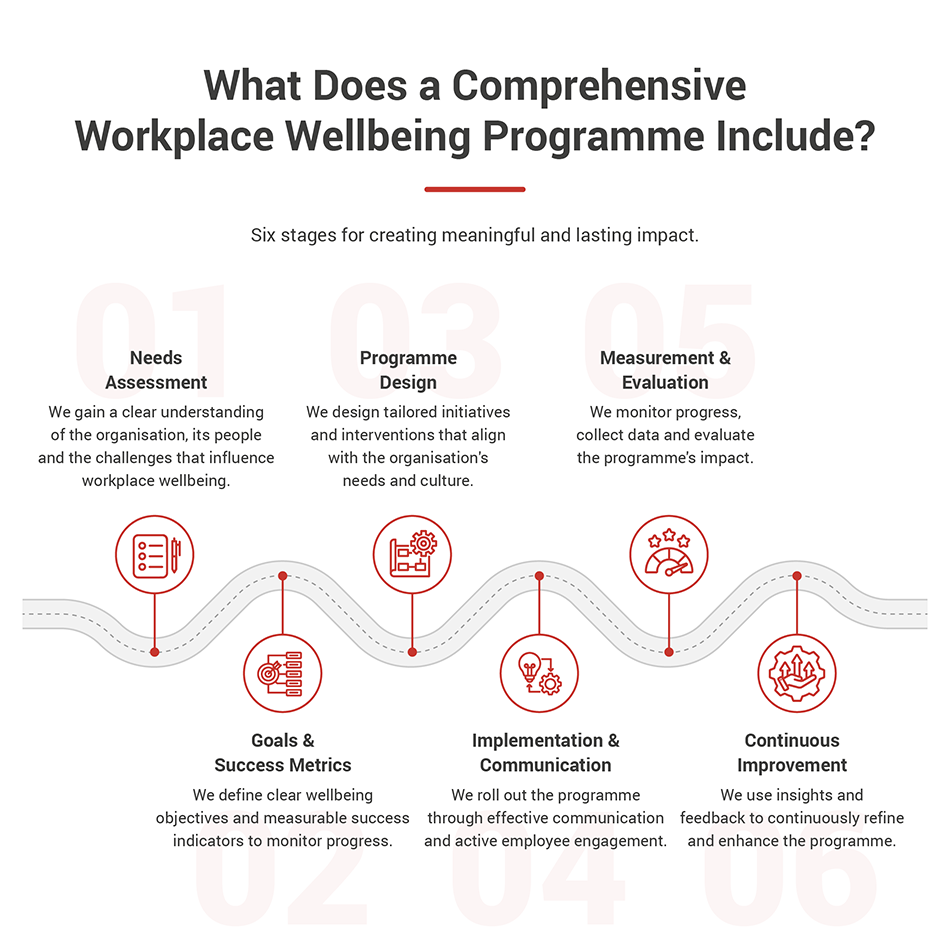
Workplace Wellbeing is not built through isolated or one-off initiatives. A comprehensive program begins with the organisation’s real needs and connects strategy, training and targeted interventions into a coherent journey with continuity and meaningful impact.

- About ErgoProlipsis
- Health & Safety
- Occupational Health and Safety in Construction Sites
- Occupational Health and Safety in Businesses
- Hospitality and F&B
- HSE Measurements
- Specialized Services
- Process and Machinery Safety
- Evacuation Plan
- OHS Audits
- Security Assessment
- Evacuation Drill using Smoke Generator
- Professional Fire Training Experience
- Inspection of Electrical Installations HD 384
- Portable Appliance Testing (PAT)
- Risk Assessment of Slippery Floors
- Behavioral Based Safety
- HSE Management Systems
- Business Continuity Plan (B.C.P.)
- Heath Safety and Environment (HSE) Legal Registry
- Health Safety and Environment (HSE) Gap Analysis
- Work Ergonomic Analysis Study
- Protection against violence & harassment in the work environment
- Workplace Wellbeing
- Sustainable Development
- Sustainability Strategy
- Corporate Responsibility Strategy (CSR) Strategy
- Sustainability Reporting & Regulatory Compliance
- Corporate Social Responsibility (CSR) Strategy
- Climate Law & Carbon Footprint
- Responsible Supply Chain Management
- Sustainable Tourism Development
- ESG Training & Awareness
- InHouse ESG 2030
- Training
- Occupational Safety
- OHS Training
- Fire Safety – Fire Protection
- Emergency Response Training
- Safety in Forklifts
- Safe Cargo Training
- Safe Transport of Hazardous Goods – ADR
- Defensive Driving
- Safe Work at Height
- Safe Operation of Lifting Equipment
- Safe Work in Confined Spaces
- Safe Work in Warehouses and Refrigerator Chambers
- Industrial Safety
- Food Hygiene & Safety
- Health & Wellness
- Workplace Wellbeing
- Introduction to Workplace Wellbeing
- Mental Health in the Workplace
- Building resilience in demanding work environments
- Safe communication, trust and collaboration
- Healthy everyday habits for better energy
- Supporting women’s health in the workplace
- Practical tools for focus, calm and inner balance
- Managing time, priorities and personal energy
- Workplace Anxiety Management Seminar
- Occupational Safety
- News
- Contact us